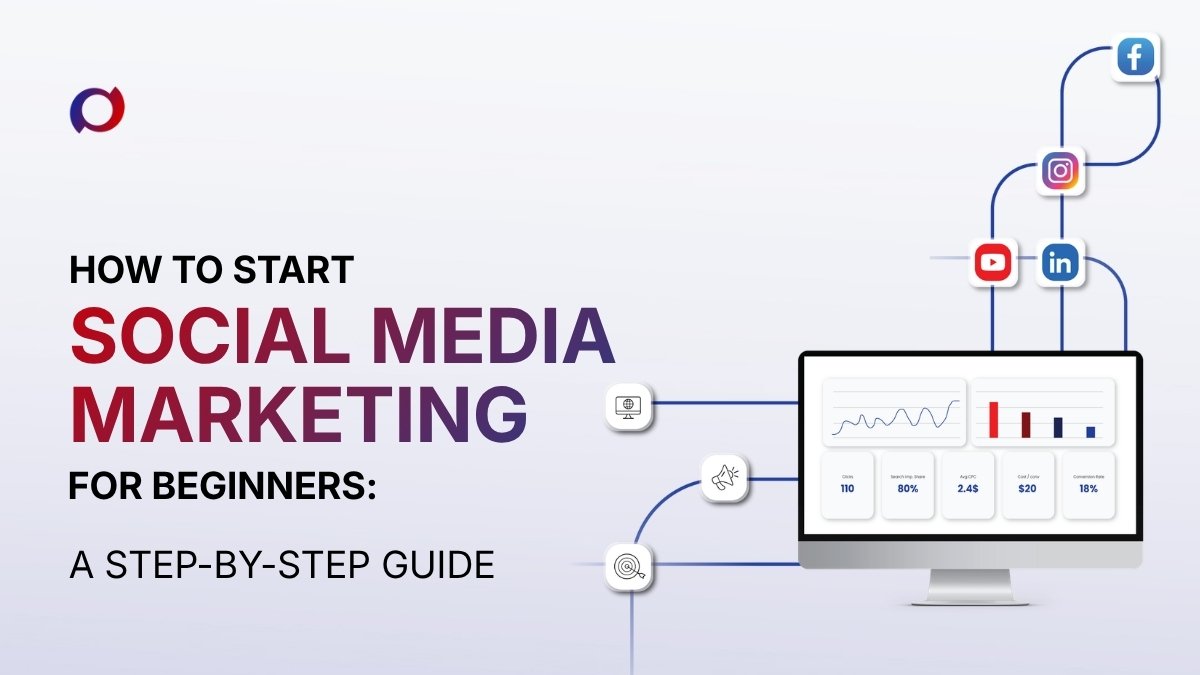
How to Start Social Media Marketing for Beginners: A Step-by-Step Guide
Posted in October 5, 2026
Share On




A friend of mine took over her family’s small furniture store last year. She had never run a business page before, and the first thing she said to me was, “I do not even know which app to open first.”That worry is the most common one we hear from beginners. The good news is that social media marketing is not something you need a certificate for. It is a skill you build by starting small and getting the fundamentals right.With 5.79 billion people using social media worldwide, the audience is already there. What most beginners lack is not access, it is a clear starting point.Before you post anything, it helps to understand there are really three paths available to you: managing social media organically through posts and engagement, running paid campaigns that put money behind specific goals, or combining both.This guide walks through all three. For businesses that eventually want professional support running targeted, measurable paid campaigns, ad360 works with beginners and established brands alike on exactly that. But you do not need to master every platform before you get started, and you definitely do not need to hire anyone on day one.
Choose platforms based on where your audience actually spends time, not where you personally enjoy scrolling. For context, LinkedIn’s US user base skews toward higher earners, with 54% earning over $100,000 annually, while TikTok’s 18 to 24 age group makes up about 39% of its global users.
For businesses that want to move beyond basic posting and build a structured, performance-focused social media advertising strategy, ad360 can help with campaign strategy, audience targeting, creative testing, optimization, and performance tracking.
Table of Contents
ToggleCan You Start Social Media Marketing With No Experience?
Yes. Most people learn by starting with one platform, posting consistently, and adjusting based on what performs. Experience builds through practice, not preparation.What Is Social Media Marketing?
In simple terms, social media marketing is using platforms like Instagram, Facebook, LinkedIn, YouTube, and TikTok to build an audience, share your brand, and eventually turn attention into business results.It splits into two broad categories, and most successful brands eventually use both.Organic Social Media Marketing
Organic activity is everything you do without paying to boost it. It is slower to build but costs nothing beyond your time and content.- Posts: share updates, tips, or announcements
- Reels and short videos: tend to get the widest reach
- Stories: quick, casual, time-limited updates
- Community engagement: joining relevant conversations
- Comments and DMs: often decide whether a follower becomes a customer
Paid Social Media Marketing
Paid social means putting a budget behind specific content so it reaches a chosen audience, rather than whoever happens to be scrolling. This has become more important as organic reach keeps shrinking. The average Instagram post now reaches just 3.5% of a brand’s followers, down from 10 to 15% in 2020, and Facebook’s organic reach has fallen to roughly 2.2%.- Facebook and Instagram Ads: broad B2C reach and retargeting
- LinkedIn Ads: B2B audiences and decision-makers
- YouTube Ads: video-first campaigns and product demonstrations
- TikTok Ads: short-form video and younger audiences
- Retargeting ads: aimed at people who already visited your website or profile
How to Start Social Media Marketing for Beginners: Step by Step
This is the part most beginners actually need. Follow these steps in order rather than jumping straight to posting.Step 1: Define Your Goal
Before you create an account or spend a rupee on ads, decide what you actually want social media to do for your business. Vague goals lead to vague results.- Brand awareness
- Website traffic
- Leads
- Sales
- App downloads
- Store visits
- Customer engagement
Step 2: Identify Your Target Audience
Beginners often skip this step, then wonder why their content does not connect. A basic audience profile should cover a few things.- Age
- Location
- Interests
- Profession
- Income or buying power
- Problems and pain points
- Online behaviour
- Buying intent
Step 3: Choose the Right Social Media Platforms
A common beginner mistake is trying to show up everywhere at once. It is better to go deep on one or two platforms than to post inconsistently across five.| Platform | Best for |
|---|---|
| Visual brands, lifestyle, B2C | |
| Broad B2C audiences, communities, local businesses | |
| B2B, professionals, decision-makers | |
| YouTube | Video, education, reviews |
| TikTok | Short-form video and younger audiences |
Step 4: Optimize Your Social Media Profiles
A half-finished profile makes visitors leave before they even see your content. Treat your profile like a small landing page.Beginner checklist:- Clear profile picture or logo
- Bio that says who you are and who you help
- Short description of what you offer
- Contact details that are easy to find
- Website link, even if it is just a link-in-bio page
- A single clear call to action
- Consistent branding across every platform you use
- Location or service area information, if relevant
Step 5: Create a Simple Content Strategy
Content works best when it is planned around a small set of repeatable themes, usually called content pillars.- Educational: tips, guides, and how-tos that help your audience
- Promotional: your products, services, and offers
- Trust-building: reviews, testimonials, and case studies
- Engagement: questions, polls, and opinion-based posts
- Brand and behind-the-scenes: your team, process, and culture
Step 6: Create Your First 30-Day Content Plan
Rather than staring at a blank content calendar, start with a simple monthly split across your pillars.- 8 educational posts
- 6 short-form videos or reels
- 4 promotional posts
- 4 testimonials or case studies
- 4 engagement posts
- 4 behind-the-scenes or brand posts
How to Start Social Media Advertising as a Beginner
Step 7: Understand the Basics of Social Media Ads
Every paid social campaign follows a similar path from first impression to repeat customer.Audience → Ad Creative → Landing Page → Conversion → RetargetingA few concepts you will run into immediately:- Campaign objective: the specific outcome you are paying for
- Audience targeting: who sees the ad
- Creative: the image or video used
- Ad copy: the text and headline
- Budget: how much you are willing to spend
- Landing page: where the click goes
- Conversion tracking: confirming the action actually happened
Step 8: Start With One Platform
Spreading a small budget across four platforms usually means none of them get enough data to perform well. Pick one platform based on a few factors.- Where your target audience is most active
- What you are selling, since visual products suit Instagram while B2B services suit LinkedIn
- Your specific campaign goal
- How much budget you can commit consistently
- Where your customer typically is in their buying journey
Step 9: Create Multiple Ad Variations
Never run a single version of an ad and hope for the best. Testing beats guessing every time.- Different headlines
- Different images or videos
- Different offers
- Different calls to action
- Different audiences
Track the Right Social Media Marketing Metrics
Not every number on your dashboard is worth obsessing over. Separate what looks good from what actually moves the business.Beginner Metrics
- Reach
- Impressions
- Engagement
- Followers
Business and Performance Metrics
- Click-through rate (CTR)
- Cost per click (CPC)
- Leads
- Cost per lead (CPL)
- Conversion rate
- Cost per acquisition (CPA)
- Return on ad spend (ROAS)
How Much Does It Cost to Start Social Media Marketing?
There is no single honest answer here, and any guide that gives you one fixed number is probably guessing. Costs depend on your market, audience size, competition, and objective.Organic Social Media
Mostly an investment of time and content creation resources, such as a phone camera, basic editing tools, and someone to manage posting consistently.Paid Social Media
- Advertising budget itself
- Creative costs, such as photography, video, or design
- A landing page or website to send traffic to
- Tracking and analytics setup
- Agency or management fees, if you choose to work with a partner
Common Social Media Marketing Mistakes Beginners Make
- Trying to be active on every platform at once
- Posting without any underlying strategy
- Focusing only on followers instead of business outcomes
- Constantly selling with no useful content in between
- Never clearly defining a target audience
- Using poor-quality images or video
- Not tracking conversions, only likes and comments
- Changing campaigns too quickly before they have enough data
- Running ads without a proper landing page to receive the traffic
- Boosting posts without understanding what campaign objective actually does
Can You Do Social Media Marketing Yourself or Should You Hire an Agency?
Both paths are valid. It depends on your time, budget, and how quickly you need results.| DIY | Agency or expert |
|---|---|
| Lower initial cost | Professional expertise |
| More control | Faster execution |
| Requires learning | Strategy and execution combined |
| Time-intensive | Saves internal resources |
| Trial and error | Structured testing |
How ad360 Can Help Beginners Get Started With Social Media Marketing
Strategy and Audience Research
Understanding who to target and what messaging is likely to resonate, before a single rupee is spent on ads.Campaign Setup
Building campaigns around specific objectives, whether that is leads, sales, traffic, or awareness.Creative and Ad Testing
Testing different formats, messages, audiences, and offers rather than relying on a single untested ad.Performance Optimization
Monitoring campaign performance continuously and optimising based on meaningful business metrics, not just impressions.Reporting
Turning campaign data into actionable insights, rather than a report that only lists impressions and clicks.In short, ad360 helps businesses turn social media from a posting activity into a measurable customer acquisition channel.A Simple 30-Day Social Media Marketing Roadmap for Beginners
Week 1: Foundation
- Define your goals
- Identify your audience
- Choose your platforms
- Optimize your profiles
Week 2: Content
- Define your content pillars
- Create a content calendar
- Produce your first batch of content
Week 3: Launch
- Start publishing consistently
- Test different content formats
- Identify which early topics are performing
Week 4: Analyze and Improve
- Review engagement across your posts
- Identify your best-performing content
- Set up or optimize a paid campaign
- Begin testing audiences and creatives
FAQs About Starting Social Media Marketing
Can I start social media marketing with no experience?
Yes. Most people learn by starting with one platform, posting consistently, and adjusting based on what performs. Experience builds through practice, not preparation.
How do I start social media marketing as a beginner?
Start by defining a clear goal, identifying your target audience, choosing one or two platforms, optimizing your profile, and following a simple content plan for the first 30 days.
Which social media platform is best for beginners?
It depends entirely on your audience and business type. Instagram suits visual B2C brands, LinkedIn suits B2B services, and TikTok suits younger, video-first audiences.
How much money do I need to start social media marketing?
Organic social media can start with no ad budget at all, just time and content. Paid campaigns can begin with a modest daily budget, though actual costs vary by industry and competition.
Can I do social media marketing myself?
Yes, especially in the early stages. Many businesses manage organic content themselves and bring in expert support once they are ready to scale paid advertising.
How long does it take to see results from social media marketing?
Timelines vary by goal. Engagement metrics often move within 4 to 8 weeks, while lead generation and sales typically need 3 to 6 months of consistent effort.
Is social media marketing difficult to learn?
The basics are approachable for most beginners. The harder part is staying consistent and interpreting data correctly, which is where structured guidance helps.
Should beginners start with organic social media or paid ads?
Most beginners benefit from starting organically to understand their audience and test messaging, then layering in paid ads once they know what content actually resonates.
Start Small, Learn, Test, Scale
Getting started with social media marketing does not require mastering every platform or every tactic on day one. Three principles carry most beginners a long way.- Start with one audience.
- Start with one or two platforms.
- Measure what actually contributes to business results.


Leave a Reply